We Are Still Here! Native American Truths Everybody Should Know
Sorell, Traci illustrated by Lessac, Frane. We Are Still Here! Native American Truths Everybody Should Know. Charlesbridge, 2021. Ages 7-10.
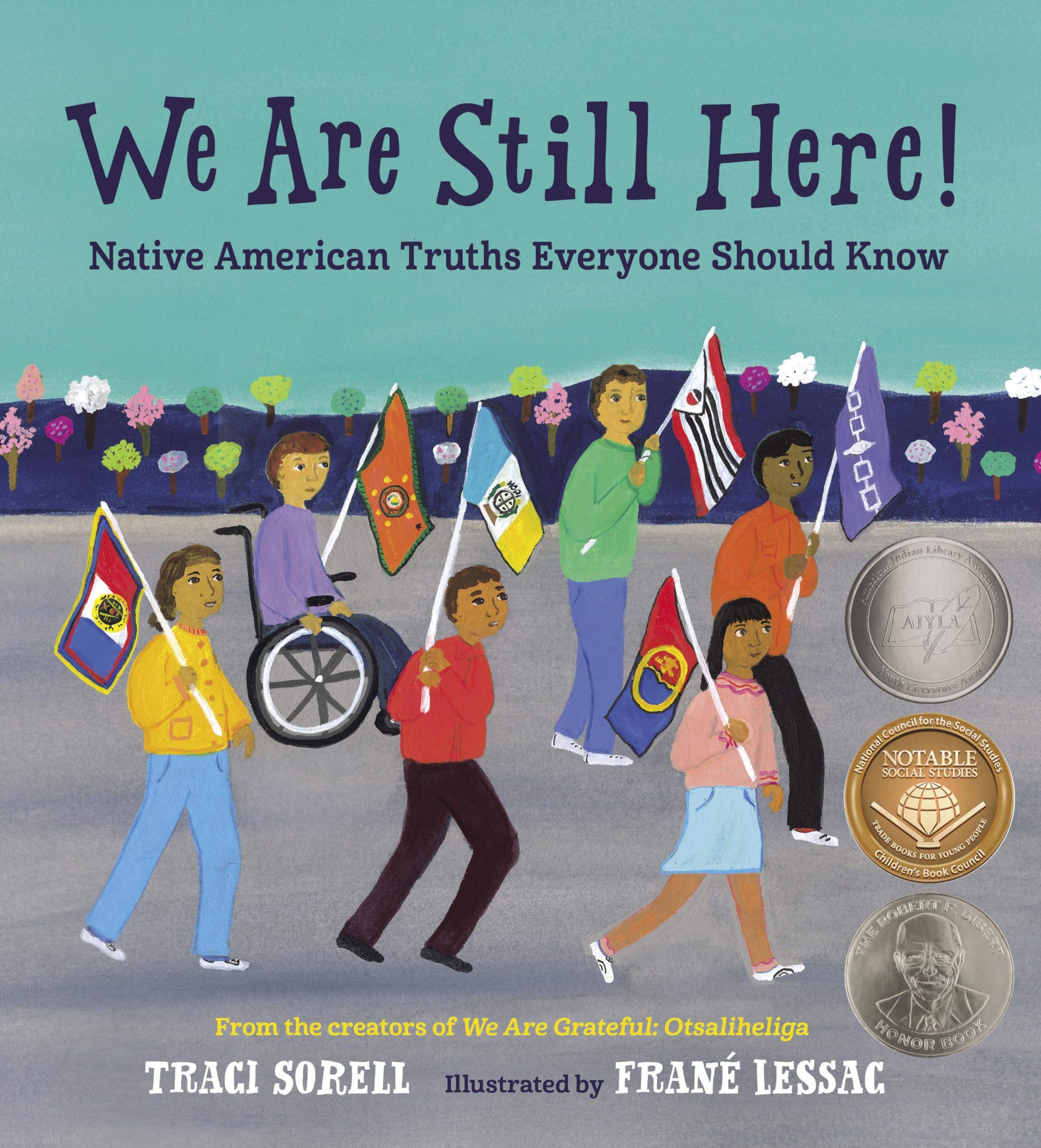
This story is told by the students at the Native Nations Community School who are putting on their presentations for their school for Indigenous Peoples's Day. Author Traci Sorell is a citizen of the Cherokee Nation and an award-winning author with firsthand experience of growing up in the Cherokee Nation, highlighting, “Her mother’s Cherokee family has been in the area since the removal of most Cherokee people from their southeastern homelands in 1838. Traci grew up hearing stories about her ancestors and looking at their photographs with her elisi (eh-lee-see), grandma. Now her son does that with his elisi, in addition to fishing in the nearby lake and learning their Cherokee culture” (Meet Traci, Tracisorell.com).
Sorell engages their readers by using kids and setting up the premise that the information presented is put together by the kids for their Indigenous People’s Day. The introduction provides background into the Native nations and each presentation features the kids name who create the presentation, and overview of the subject, an illustration, and the phrase “We Are Still Here!”.
Because it is the kid's presenting information, the tone and information presented is appropriate for the age range targeted. The depth of information addresses the necessary questions kids might have and expands students understanding of what it means to be an Indigenous person. Sorell makes it clear in the author's note the significance of the information presented, “All the information on these pages is true – this book is non-fiction. The students giving the presentation in the book are not real, but there are Native-operated schools like the one depicted in this book where young people learn these facts. Everything in this book is a fundamental part of the United States’ history, as well as its present, and should be known by everyone living in this country” (Authors Note 41).
The set up of the book with the fake school presentations increases the accessibility of the text. The book also includes a term glossary and a historical timeline that puts the events mentioned into context. The illustrations are jeweled toned and showcase a variety of diverse characters. The illustrations further highlight the topic researched by the students. This own-voices diverse educational work belongs in any young readers libraries that will expand their understanding on issues plaguing the Native American Community.


Comments
Post a Comment